Artemisia Gentileschi is one of the few women artists whose name has reached our days - and her worth is often shadowed, not for the best reasons.
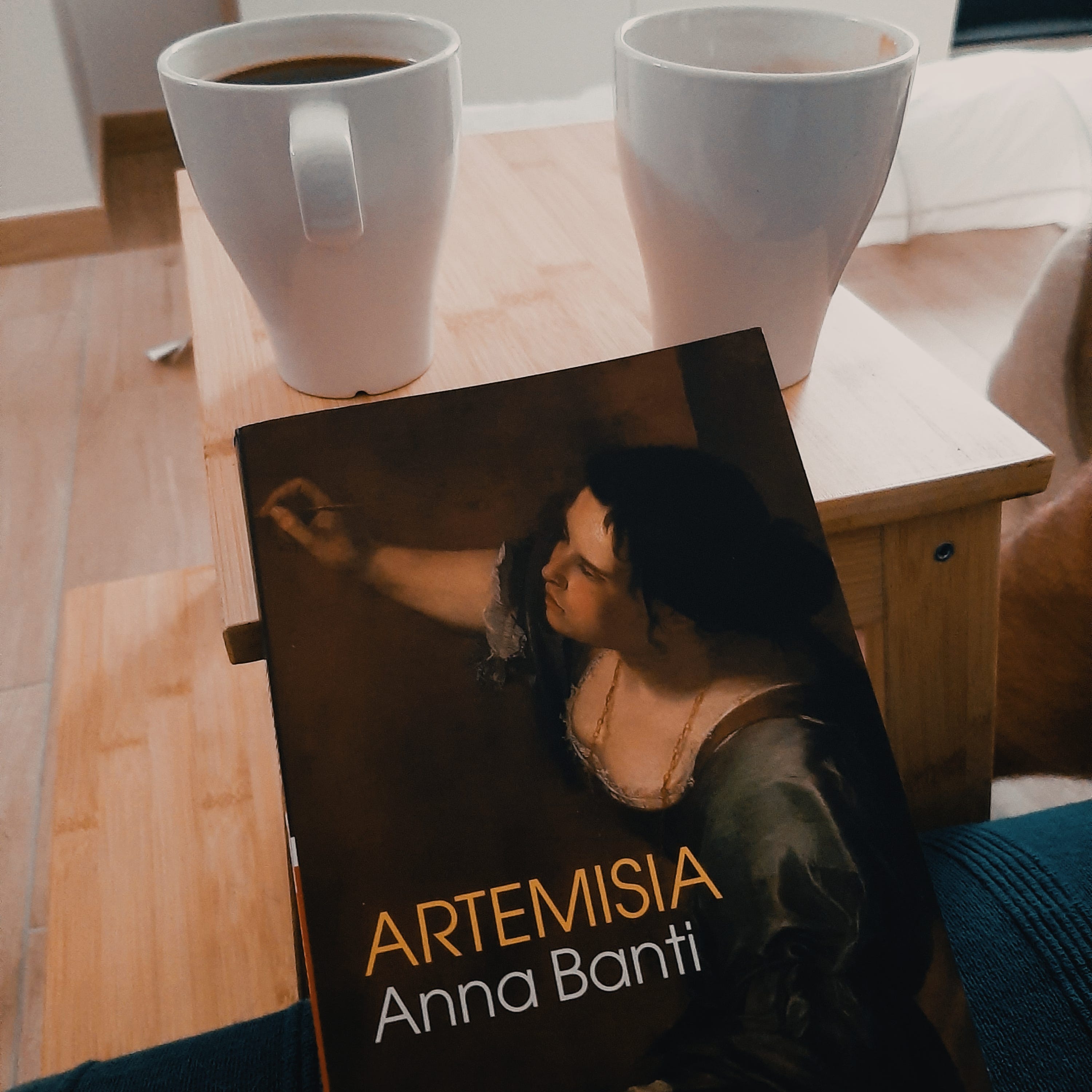
This book by Anna Banti (pseudonym of Lucia Lopresti) has an interesting stoy by itself. Lucia Lopresti had just finished her draft in 1944 when Firenze was bombed by the German troops evacuating the city and she (along with several other Firenze people) lost her house and her work. But, as Bulgakov wrote in The Master and Margarita, manuscripts don’t burn - and the book was rewritten, no longer a simple biography as originally done, but a work that contains both the slightly fictioned Artemisia’s life and Lucia Lopresti’s actual, biographical troubles as a refugee in her own city, shaken by the events but strengthened by Artemisia’s story.
The story of Artemisia Gentileschi is intriguing enough. We understand she had an opportunity that, as a woman in the 17th century, was definitely uncommon - her father Orazio Gentileschi having an atelier, and also having been widowed when Artemisia was a young child, meant she could learn how to paint and work along him and make a name for herself from his name and legacy. Not only this - she excelled at her work.
This book, like most historical fiction (if not all) that focus on an actual person and not just a period in History, has some creative license in details and descriptions. Lucia Lopresti however did not give in to drama to make Artemisia’s story (already dramatic by itself) more appealing; she portrays Artemisia in her solitude, as much more than a product of her rape by Agostino Tassi. She works on violent biblical themes where women are portrayed as strong and angry; her work becomes dark, angry, dramatic with its chiaroscuro, reflecting strong and violent themes, and it is still appreciated today.
There was nothing on any of the canvasses that she would have liked to hide or conceal, nor was she ashamed of being thus exposed through her work, good or bad though it might be, the essence, the unique flavour of days when she had been happily engrossed in recreating a face or a garment, in inventing an effective light, in applying an expressive glaze.
But this book accompanies Artemisia’s life beyong these difficulties, makes her more than the violence she suffered and which is still one of the best known parts of her life. It tells the reader (amid some fictionalisation) how, despite all the difficulties from being a woman, from being subjected to sexual violence, she was famous for her own work, she got married, had her own passions, travelled and had a rich life.
This results in a rather intimate portrait (hah!) of an artist that could have been forgotten by now. Lucia Lopresti’s work and creativity on another woman’s work and creativity make Artemisia come to life. This is such an interesting book about such an interesting figure in history - I truly recommend it if you like art, art history, historical fiction and reading about powerful women.
Translated by Shirley D Caracciolo
If you’re in Portugal, you can get another edition via wook, in English, as it was not translated into Portuguese.