Of course I’m the last person to have read this?
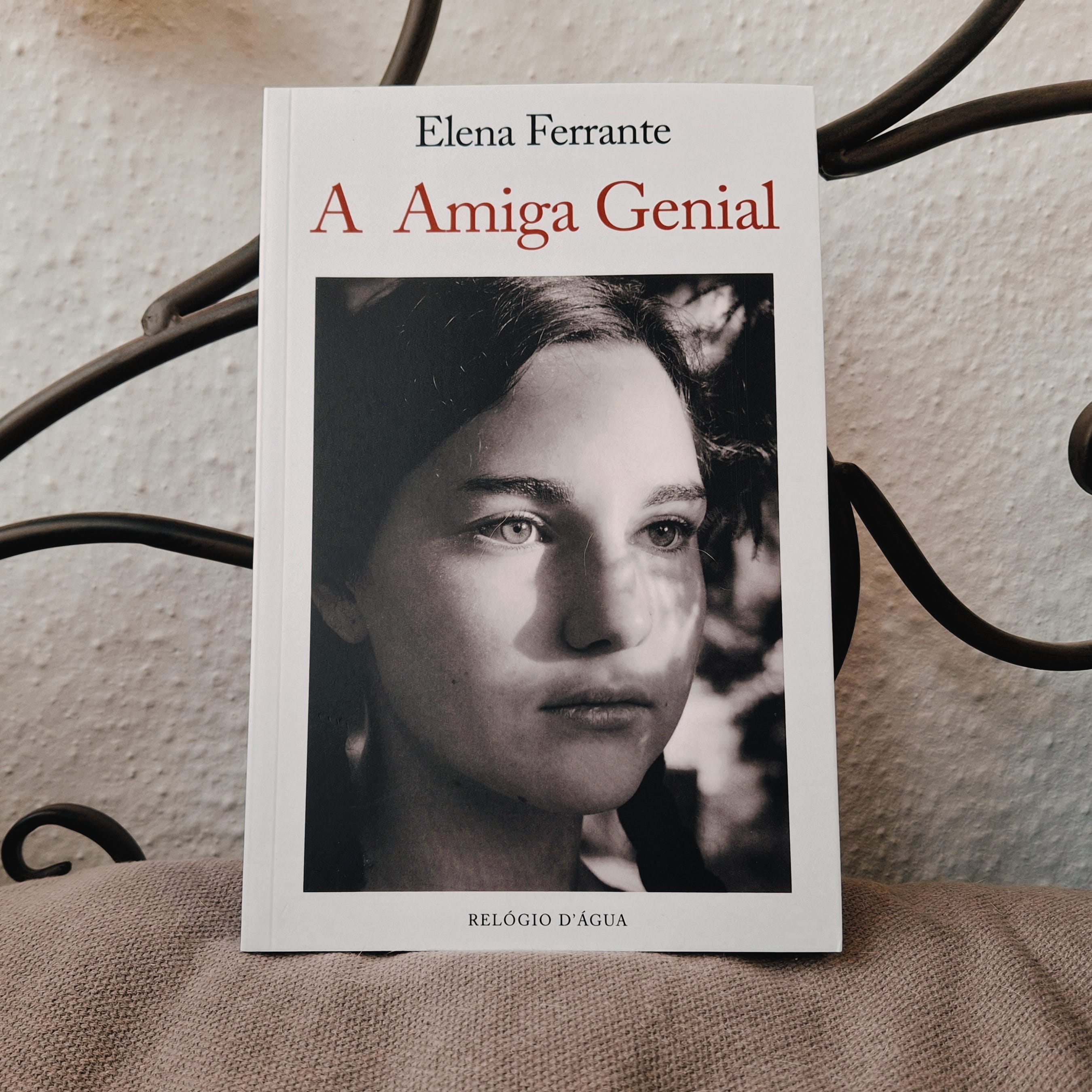
As with other books I read for my personal 2025 challenge, you can listen to me and my friend discussing this book, in Portuguese, in our podcast below:
My Brilliant Friend, A Amiga Genial, in Portuguese, starts with a bang when a manchild type calls the narrator, his mother’s best friend telling her his mother, Lila, has disappeared. The friend doesn’t seem very worried, vaguely mentioning that it’s typical her friend would do that - and then the narrator, interestingly named Elena (or Lenù) starts reminiscing on what I understand will be a 60 year journey of both of these women’s lives.
This premise is intriguing enough - the woman who disappears without any trace - but it is quickly forgotten as once falls into the setting. This book is set in the late 1940s or early 1950s in a poor suburb of Naples and narrates their lives from childhood until adolescence, when they are 16. Lenù and Lila’s lives are entertwined as Lenù tells the reader about the weird dynamics of their intensively codependent friendship, which is not linear or exactly common, but filled with rivalry, admiration, dichotomies between their different types of intelligence, and feelings of inferiority regarding the other. Lila is bright, unpredictable, brave, and is not afraid of trouble; also, Lila seems to be the smartest at school (which Lenù resents), but when they turn 10 and the teacher wants them both to pursue their educations, only Lenù’s parents give in to her bullying - Lila is asked to start helping at her father’s shoe repair business.
This could have drifted them apart, as their lives start taking different paths, but something keeps drawing them to each other. Their world is very small - a few streets in that poor suburb and little more, and by age 10 none of the girls has ever left the neighbourhood. As Lenù’s world widens, the neighbourhood and its people start becoming claustrophobic. Families intermingle and the character glossary in the first pages is very much appreciated.
It is also increasingly more obvious how this neighbourhood is ripe for violence of all sorts. There is a defenestration scene treated with too much banality, sexual assault quickly forgotten, casual bloody street fighting. Everyone’s existence is precarious; mafia is hinted at; and by the end of the first book comes the realisation that among them, even the richer were poor. There is a sense of detachment as this is told in a brutally honest way.
Lenù is always jealous of Lila in a way, despite her studying seemingly making her more successful in their desire to escape poverty. Interestingly, we never learn Lila’s point of view in any of what Lenù is recalling. Maybe this is why Lila seems harder to understand, yet a more fascinating character.
The way this book brings characters and places to life (even when there are way too many side characters, imo) makes it almost feel like a memoir. As we know pretty much nothing about Elena Ferrante, and as interesting as it is that her narrator-protagonist is also named Elena, one can only guess.
The ending of this book elevated the whole story for me - with the whole wedding, the tensions, THE SHOES!. I am yet to watch the TV Series, but I’ve heard the whole final episode of the first season focus on this part of the novel.
If you’re in Portugal, you can get a physical edition via wook, in Portuguese or in English.